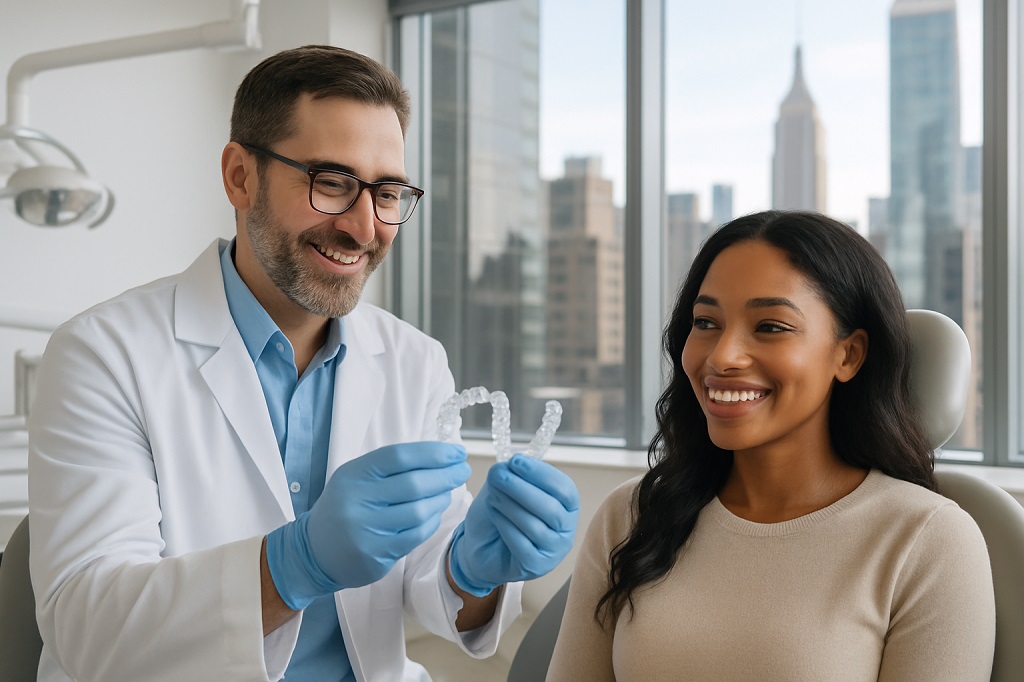
Finding the right Invisalign dentist NYC can transform your smile without the hassle of traditional metal braces. When searching for an Invisalign dentist NYC, you need a provider who combines expertise, advanced technology, and transparent pricing to deliver results that match your lifestyle and budget. New York City offers numerous orthodontic options, but selecting a qualified Invisalign provider requires understanding treatment costs, evaluating provider credentials, and knowing what benefits clear aligners offer over conventional orthodontic methods.
Key Takeaways
- Invisalign treatment in NYC typically costs between $4,000 and $9,000, with most comprehensive cases averaging $5,500 to $7,500
- Provider experience and technology significantly impact treatment outcomes and overall satisfaction
- Clear aligners offer removable convenience, nearly invisible aesthetics, and shorter treatment times compared to traditional braces
- Insurance coverage can reduce out-of-pocket expenses by $1,500 to $3,500 depending on your plan’s orthodontic benefits
- Payment plans and financing options make treatment accessible for patients without full upfront payment capability
- Choosing a provider near your workplace or home in Manhattan makes attending regular appointments more convenient
Understanding Invisalign Treatment Costs in New York City
Invisalign pricing in Manhattan reflects the premium nature of practicing dentistry in one of the world’s most expensive cities. Treatment costs range from $4,000 to $9,000 depending on case complexity, with most patients paying between $5,500 and $7,500 for comprehensive correction. These prices include initial consultation, digital scanning, custom treatment planning, all necessary aligners, refinement trays if needed, retainers to maintain results, and monitoring appointments throughout your treatment journey.
Simple cases addressing minor spacing or cosmetic adjustments typically fall at the lower end of the spectrum, around $3,500 to $4,000. Moderate cases involving crowding or bite correction usually cost $4,000 to $6,500, while complex cases requiring extensive movement or severe misalignment correction can exceed $8,000. The complexity of your specific dental situation remains the biggest factor determining your final price quote.
Location within New York City also influences pricing. Manhattan practices face higher operational costs including elevated rent, staffing expenses, and overhead, which translates to premium pricing compared to national averages. However, this investment delivers access to some of the country’s most experienced Invisalign providers using cutting-edge technology and techniques.
Insurance Coverage and Payment Options
Dental insurance can significantly reduce your Invisalign investment. Most plans offering orthodontic benefits cover a portion of clear aligner treatment, typically reducing out-of-pocket costs to between $2,000 and $4,500. Coverage amounts depend on your policy’s lifetime orthodontic maximum and specific eligibility criteria, so verifying benefits before starting treatment proves essential.
Without insurance, patients pay the full treatment cost, which averages $3,500 to $7,000 nationally but skews higher in NYC. Many Manhattan practices offset this financial barrier by offering flexible payment plans, including zero-percent interest financing options that spread costs over monthly installments. Some providers advertise promotional pricing, with certain NYC offices offering complete treatment starting at competitive rates for qualifying cases.
Requesting a detailed, itemized estimate upfront ensures transparency and helps you prepare for the total investment. This estimate should break down all included services, potential additional costs, and available financing arrangements so you can make an informed decision without unexpected expenses later.
Benefits of Choosing Invisalign Over Traditional Braces
Clear aligners deliver several advantages that make them particularly appealing to New York professionals and adults seeking orthodontic correction. The nearly invisible appearance allows you to straighten teeth without the conspicuous metal brackets and wires associated with traditional braces. This aesthetic benefit proves invaluable for professionals who interact with clients, attend meetings, or simply prefer discretion during treatment.
Removability represents another significant advantage. Unlike fixed braces, you can remove Invisalign trays for eating, drinking, brushing, and flossing, which maintains better oral hygiene and eliminates dietary restrictions. This flexibility means you can enjoy your favorite foods without worrying about damaging brackets or getting food stuck in wires.
Treatment duration typically runs shorter with Invisalign compared to conventional braces. Most cases complete within 6 to 18 months, while traditional braces often require 12 to 24 months. The smooth plastic aligners also prove more comfortable than metal braces, causing less irritation to your cheeks and gums throughout treatment.
Selecting a Qualified Invisalign Provider in NYC
Provider experience directly impacts treatment quality and final results. Look for dentists or orthodontists with extensive Invisalign training and a proven track record of successful cases. Invisalign recognizes top providers through tier designations including Preferred, Premier, and Diamond status based on the number of cases completed annually. Diamond providers demonstrate the highest level of experience and expertise.
Technology and treatment planning capabilities matter significantly. Advanced practices use digital scanning instead of messy impression putty, creating more accurate models of your teeth. Precision planning software allows providers to map your entire treatment digitally, showing predicted outcomes before you even start wearing aligners. This technology ensures better results and fewer surprises during treatment.
Patient reviews and testimonials offer valuable insights into provider quality. Research feedback about communication style, office efficiency, treatment results, and overall patient satisfaction. Many NYC patients specifically recommend providers who explain the process thoroughly, respond quickly to concerns, and make office visits convenient for busy schedules.
What to Expect During Your Invisalign Journey
Treatment begins with an initial consultation where your provider evaluates your dental situation and determines if Invisalign suits your needs. During this visit, you discuss goals, timeline expectations, and receive a cost estimate tailored to your specific case. Many Manhattan practices offer this consultation free of charge or at a reduced rate.
Once you commit to treatment, your dentist creates a digital scan of your teeth and develops a customized treatment plan. This plan shows the predicted movement of your teeth at each stage and the approximate number of aligner sets required. You receive your first several sets of aligners and instructions to wear them 20 to 22 hours daily, changing to a new set every one to two weeks as directed.
Progress check appointments occur every six to eight weeks, allowing your provider to monitor movement and make any necessary adjustments. These visits take less time than traditional braces adjustments since there are no wires to tighten or brackets to replace. After completing your primary aligner series, you may need refinement aligners to perfect results, followed by retainers to maintain your new smile.
Common Concerns and Considerations
Compliance plays a crucial role in treatment success. Unlike braces that work continuously, Invisalign depends on you wearing the aligners as prescribed. Removing them too frequently or for extended periods delays progress and extends treatment duration. Patients who struggle with discipline sometimes achieve better results with traditional braces that require no patient cooperation beyond keeping appointments.
Discomfort occurs during the first few days of each new aligner set as your teeth adjust to the new position. This pressure sensation indicates the aligners are working properly, though it can feel uncomfortable initially. Most patients adapt quickly and find the temporary discomfort far less bothersome than the constant irritation braces can cause.
Attachments, small tooth-colored bumps bonded to certain teeth, may be necessary to facilitate specific movements. While these attachments are less noticeable than braces, they do make your aligners slightly more visible and can feel rough against your lips initially. Your provider explains which teeth need attachments during the planning phase so you know what to expect.
Why Choose Smile Cafe for Your Invisalign Treatment
When selecting an Invisalign Dentist NYC, choosing a practice that prioritizes patient care and delivers exceptional results makes all the difference. Smile Cafe offers custom-created clear aligners designed to shift your teeth into place gradually, with aligner trays switched every couple of weeks as your teeth move into their ideal positions. The practice combines expert care with advanced technology to ensure each patient receives personalized treatment tailored to their unique dental needs and aesthetic goals.
Making Your Final Decision
Choosing an Invisalign dentist in NYC requires balancing cost, convenience, provider expertise, and personal comfort. Schedule consultations with multiple providers to compare treatment plans, pricing structures, office locations, and overall impressions. Ask specific questions about the dentist’s Invisalign experience level, success rate with cases similar to yours, and what happens if results don’t meet expectations.
Consider how the office location fits your daily routine. Manhattan offers providers throughout the city, so selecting one near your workplace or home makes attending regular appointments easier. Evaluate office hours and scheduling flexibility, particularly if you have limited availability due to work commitments.
Trust your instincts about the provider-patient relationship. Your Invisalign journey spans many months of regular contact, so feeling comfortable communicating with your dentist and their team enhances the overall experience. A provider who listens to your concerns, explains treatment clearly, and demonstrates genuine interest in achieving your goals creates a partnership that leads to better outcomes and greater satisfaction with your investment.
Frequently Asked Questions
Invisalign proves worth the investment for most patients who want straighter teeth without the appearance and lifestyle restrictions of traditional braces. The treatment delivers significant benefits beyond aesthetics, including improved dental health, easier flossing and cleaning, and enhanced confidence when smiling. Many patients report that witnessing their teeth transform throughout treatment boosts their self-esteem immensely, making them feel more comfortable in social and professional situations. The process requires dedication to wearing aligners 20 to 22 hours daily and lifelong retainer use afterward, but most people find these requirements manageable compared to the lasting results they achieve. If you have genuine dental concerns like overcrowding, gaps, or bite issues, the investment typically pays off through both improved oral health and cosmetic enhancement.
Invisalign treatment duration varies based on case complexity, but most patients complete their journey within 12 to 18 months. Simple cases addressing minor spacing or crowding issues can finish in as little as 6 to 12 months, while moderate misalignment involving overbites, underbites, or crossbites typically requires 12 to 18 months. Complex cases with significant misalignment may extend beyond 18 months or reach 24 months for comprehensive correction. Your commitment to wearing aligners as prescribed directly impacts treatment length, since removing them too frequently delays progress and extends your timeline. Most patients change to a new aligner set every one to two weeks, with progress check appointments scheduled every six to eight weeks to monitor movement and ensure treatment stays on track.
Invisalign causes less discomfort than traditional braces, though you will experience some pressure and mild pain when starting each new aligner set. The discomfort typically peaks within the first 24 hours after switching to a new tray and gradually subsides over 2 to 3 days as your teeth adjust to the new position. This pressure sensation indicates the aligners are working properly to shift your teeth into their correct positions. Most patients find the temporary discomfort far more tolerable than the constant irritation that metal braces can cause against cheeks and gums. The smooth plastic material of Invisalign trays rarely causes cuts or sores, and because the aligners are removable, you can take them out briefly if discomfort becomes bothersome during meals or important events, though consistent wear remains essential for treatment success.